Protect your home from deed fraud.
Title Barrier records a notice on your home's title. If anyone tries to sell your home or borrow against it, the notice tells the title company or lender to check with you first.
- Works alongside title insurance
- County fees included
- Full refund before we file
- Cancel anytime
Works in every county in the United States.
Rated 5 stars by homeowners
Read what the video says
Your home can be sold without you ever knowing. It's called deed fraud. A thief looks up your name, fakes your identity, and forges your signature. Then they sell your home, or borrow against it. The county records the papers. And nobody calls you. In 2025, Americans lost $275 million to real estate fraud. Almost half of it came from people sixty and older. Monitoring services alert you after it happens. Title Barrier is built to prevent it. Here's how. We record a notice on your home's title. It becomes public, and it becomes part of your title. So when anyone tries to sell or refinance your property, it shows up in the title search. And it says one thing: check with the owner first. You get a text. If it's you, tap yes. If it's not, tap no. Signing up online takes about ten minutes, and we handle the county filing. Title Barrier. Nobody sells your home unless you say yes.
What is deed fraud?
Deed fraud is when a stranger pretends to be you so they can sell your home or borrow against it. Most people have never heard of it. This is how it happens.
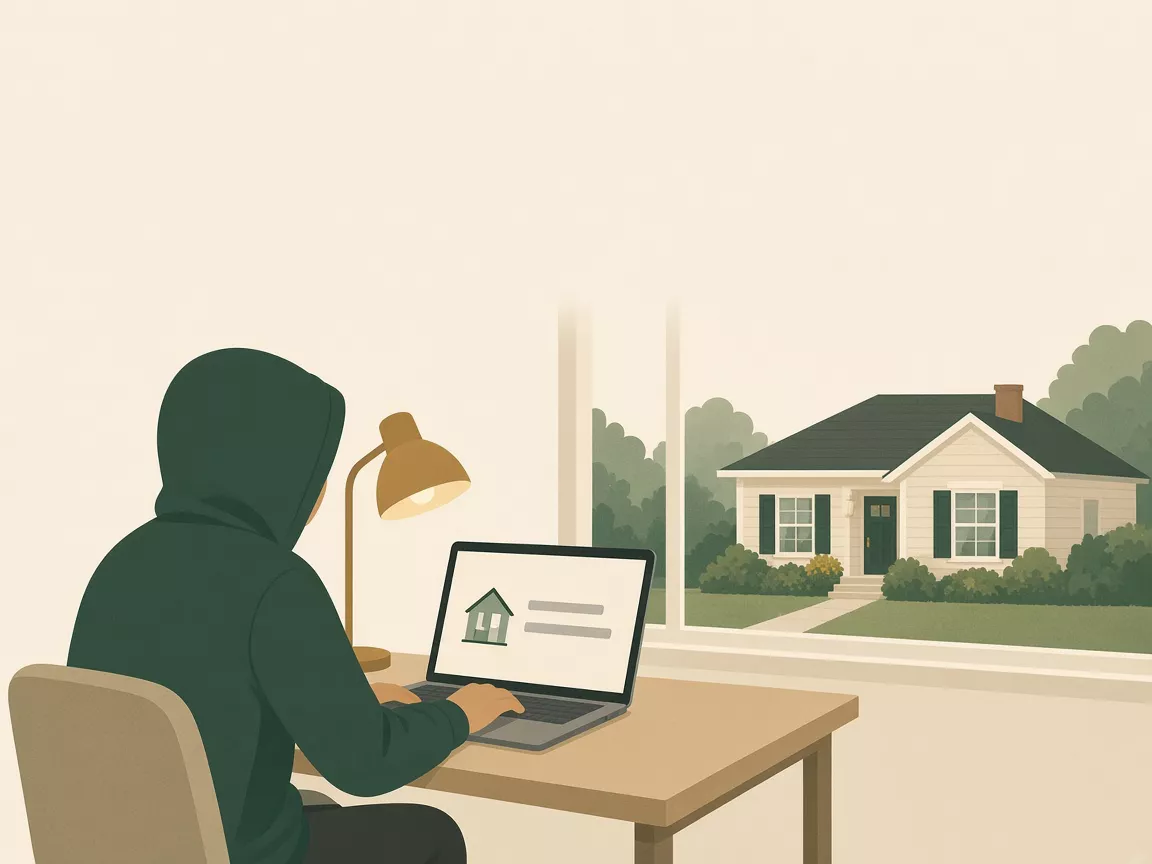
They look you up
Who owns a home is public record. Your name and address take minutes to find.
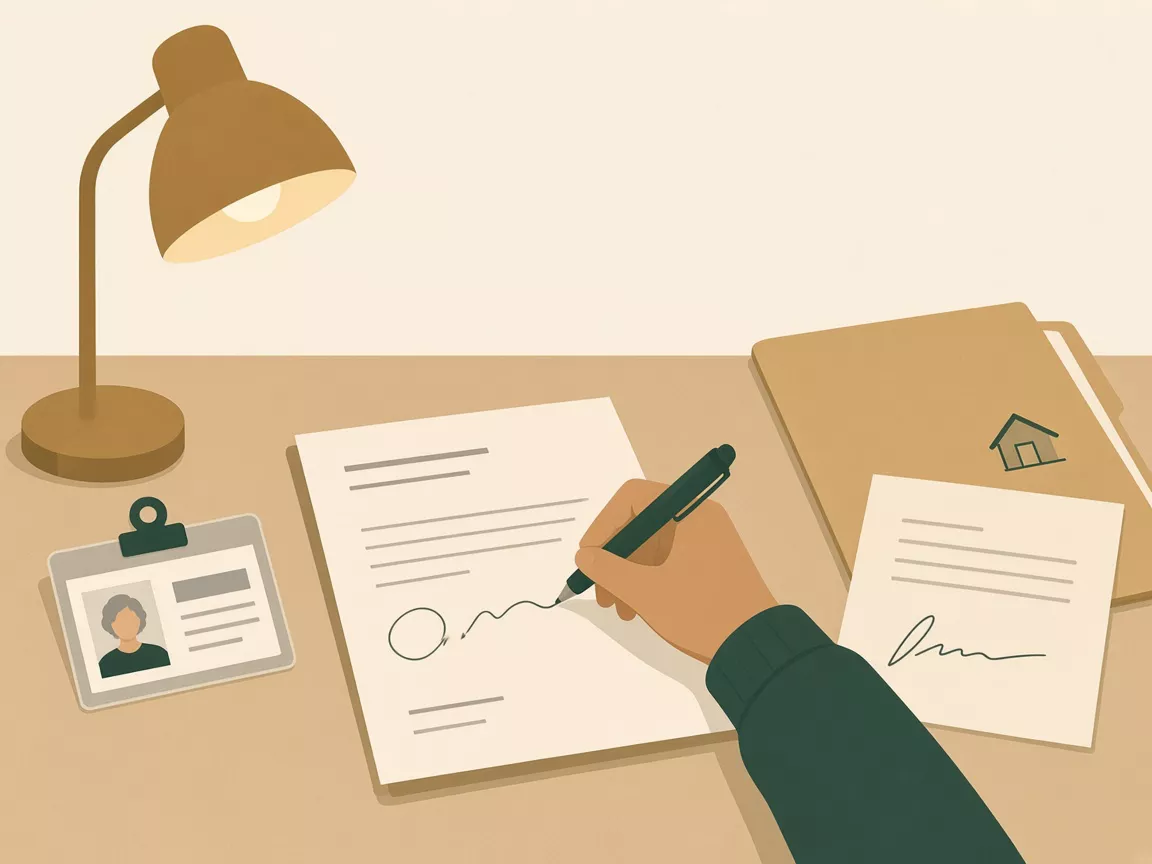
They pretend to be you
With a fake ID and a forged signature, they sell your home or take out a loan on it.
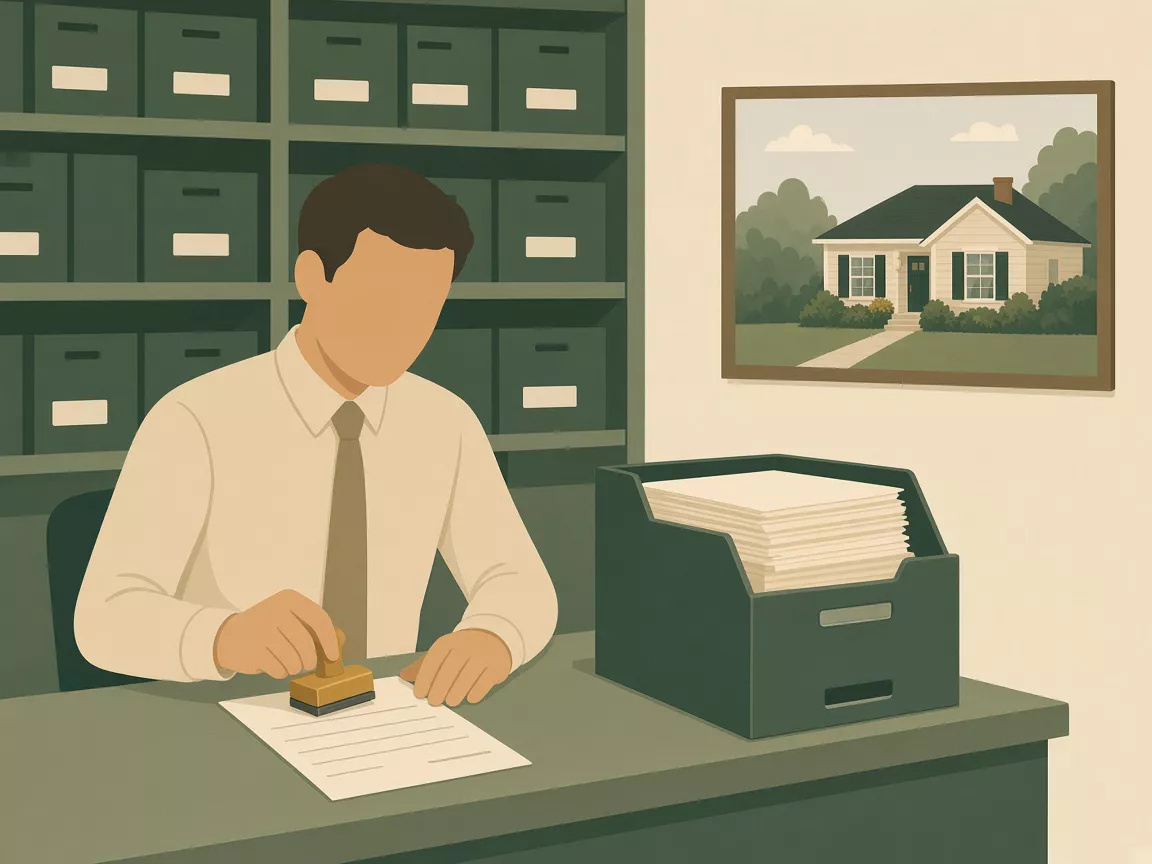
Nobody checks with you
The county records the papers without checking the signature. You may not find out until the money is gone.
lost to real estate fraud in the U.S. in 2025.
of that money was lost by people aged 60 and older.
title companies saw someone try to sell a home they did not own in 2025. A year earlier it was about 3 in 10.
Title companies say the most common targets are vacant land, owners who live somewhere else, homes owned free and clear, and homes of people who recently passed away.
Sources: FBI Internet Crime Report, 2025. American Land Title Association (ALTA), 2026 Critical Issues Study.
How Title Barrier works
You sign up once. After that, nobody can sell your home or borrow against it through a title company or lender without being told to ask you first.
- 1
You sign up online
It takes about 10 minutes. Have your photo ID ready.
- 2
We record your notice
We file it with your county, usually within one to two business days. It becomes part of your home's public record.
- 3
They see it first
Title companies and lenders search the title before a sale or loan. Your notice tells them to check with you.
- 4
You say yes or no
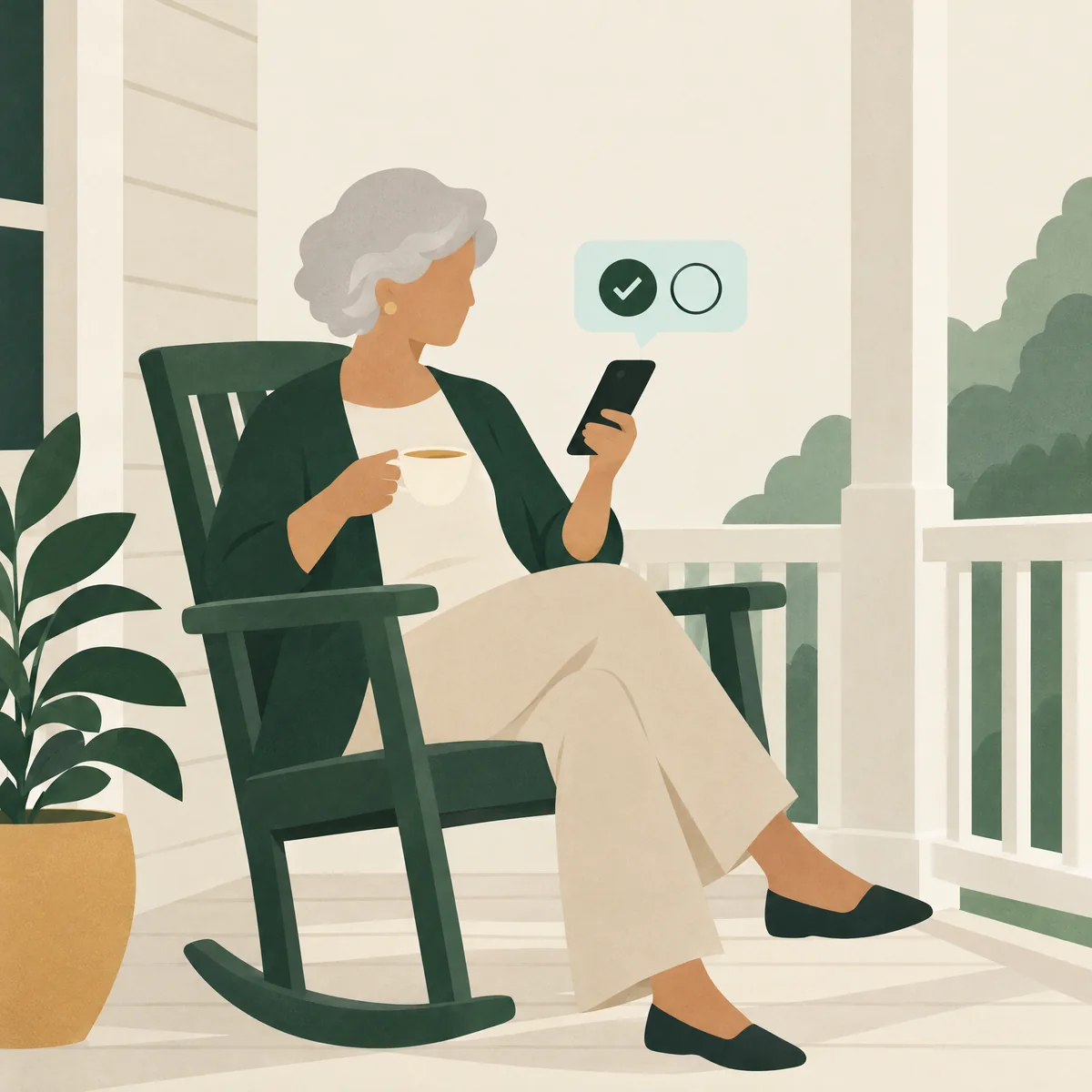
You get a text and an email. Tap yes if it is you. Tap no if it is not.
Why step 3 matters: when title companies catch a fake seller, 87% of the time it happens while they check the title before closing. That is exactly where your notice shows up. Source: ALTA, 2026.

Sign up from home.
No office visit and nothing to mail. Most people finish in about 10 minutes.
- Have your photo ID ready
- Take a quick photo of your face so we know it is you
- We prepare the notice and file it with your county

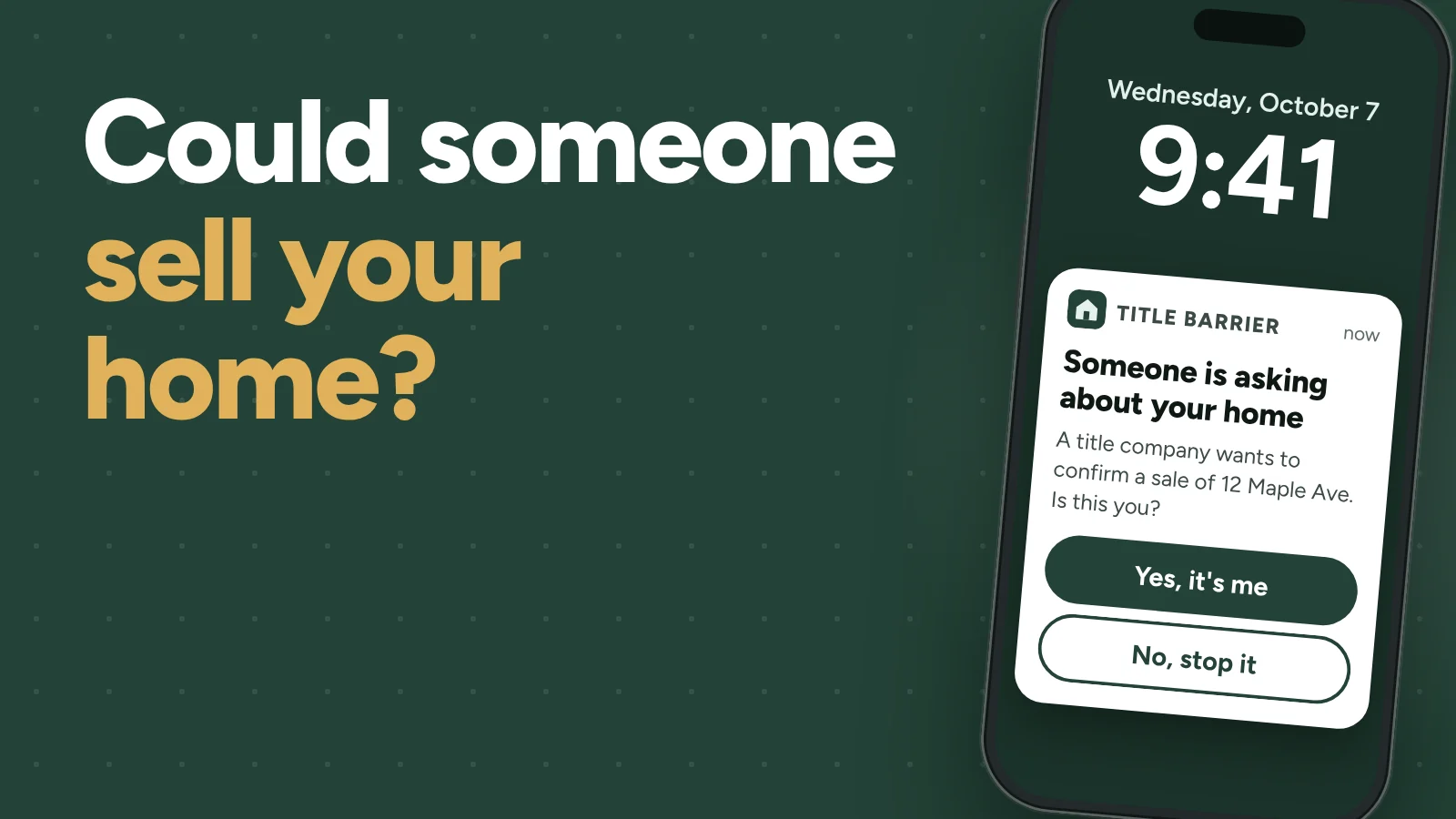
Someone is asking about your home
A title company wants to confirm a sale of your home on Maple Ave. Is this you?
This is the text you get.
It only comes when someone is trying to sell your home or borrow against it.
- Is it you? Tap yes, and the title company knows it is really you.
- Not you? Tap no, and the title company is told.
- Want to sell or refinance later? You still can. Just tap yes.
How Title Barrier compares
Most options tell you about fraud after the papers are filed. Title Barrier is built to stop the sale or loan before it closes.
| Title BarrierAsks you before | MonitoringAlert you after papers are filed | Free county alertsEmail you after papers are filed | Title insuranceMay pay for a covered loss | |
|---|---|---|---|---|
| Steps in before a sale or loan closes | Yes | No | No | No |
| Puts a notice on your home's title | Yes | No | No | No |
| Shows up when a title company or lender checks the title | Yes | No | No | No |
| Asks you yes or no by text and email | Yes | No | No | No |
| Lets title companies and lenders reach you, day or night | Yes | No | No | No |
You can use Title Barrier together with any of these. A standard owner's policy covers title problems from before you bought your home. Some newer policies and add-ons cover forgery after you buy, but they pay for the loss after it happens.
What homeowners say
“So efficient! The process to create an account took minutes, which included verifying that my house belonged to me.”
“This is the only company I could find that actually help prevent people from trying to steal properties using fraud - I have already had this happen so I am very happy to have found title barrier”
“Decided to use Title Barrier because other competitors have no proactive function......they only alert you AFTER your title may have been compromised. It took only 3 business days from 1st contact to receiving the recorded paperwork.”
What you get
- We confirm you are the real owner
- We file your notice with the county. County fees are included.
- A text and an email every time someone checks, so you can say yes or no
- A page where title companies and lenders can reach you, day or night
- An alert if your home shows up for sale on Zillow, Redfin, for sale by owner websites, or MLS databases
- Owners of 5 or more properties get a discount.
- Not ready yet? Check my home for free. It takes about a minute.
Title Barrier at a glance
- What it is
- A deed fraud prevention service for homeowners in the United States.
- What it does
- Records a notice on your home's title that tells title companies and lenders to check with you before a sale or loan.
- Who it is for
- Anyone who owns a home or other property, especially owners who are older, live elsewhere or own a home free and clear.
- Where it works
- Every county in the United States.
- Price
- $199 to set up, then $199 a year, per property. County fees included.
- Setup
- About 10 minutes online with a photo ID. The notice is usually filed within one to two business days.
- How you are asked
- By text and email. You answer yes or no from your phone.
- What it is not
- It is not title insurance and not a law firm. It works alongside your title insurance.
Questions people ask us
Still have a question? Our team answers on live chat.
Chat with usOr email contact@titlebarrier.com
What exactly is filed at the county?
A notice in your county's real estate records stating that the owner must verify any transaction. It carries a registration number and a QR code that any interested party can use to check the property's status and request your approval. Your existing mortgage and payments are not affected. A sample is available on request before you sign up.
How does an interested party verify with me?
They look up your registration number at titlebarrier.com/verify. If the property is locked, they know you have not authorized anything. If it is unlocked, they submit a request identifying the transaction, you approve or deny it from your phone, and the page updates in real time. Every request and response is logged with a timestamp on a public record.
Can I still sell or refinance?
Yes. The title company or lender sees the notice and asks for your approval. You approve from your phone in a few minutes. When you sell, we clear the notice from the record.
What if someone files a forged deed with the county anyway?
Counties check that a document is filled out correctly, not that the signature is real, so a forged deed can still be recorded. But a forged deed alone does not get the thief any money. To get paid, they have to sell, rent or borrow against your home, and that goes through a title company, lender or bank. They see the notice and check with you. That is where it stops.
Isn't title insurance enough?
A standard owner's policy covers title problems that existed before you bought your home. Some newer policies and add-ons also cover forgery after you buy, but they pay for the loss after it happens. Title Barrier is built to stop the sale or loan before it closes. Many owners use both.
Does it work in my county?
Yes. Title Barrier works in every county in the United States. We handle the filing with your county for you.
What do I need to sign up?
A government photo ID and a phone or computer with a camera. It takes about 10 minutes online. There is no paperwork to mail and no office to visit. Your notice is usually filed within one to two business days, depending on your county.
Why is there a setup fee?
It is paid once, per property. It covers confirming you own the home, preparing your notice with its registration number and QR code, and filing it with your county, including the county's recording fee. After that, $199 a year keeps the alerts, the approval requests and the verification page running.
I own several properties. How do I sign them all up?
Sign up with the first property. Once your account is set up, you can add the others from your dashboard.
What if I own the property with someone else?
One owner of record is enough. Co-owners do not need to enroll. The notice covers your interest in the property only and does not affect anyone else's.
What happens when the owner dies?
The notice ends by its own terms. It instructs any buyer, lender, or bank to proceed as if it were not there. Your family does not need anything from us, and probate and inheritance are not affected. If they want the record cleared, they send a copy of the death certificate to filings@titlebarrier.com.
What happens if I cancel?
Alerts and monitoring stop. You are never locked out of your own home. If you want the notice removed, email filings@titlebarrier.com and we file a release. Your title then reads exactly as it did before.
Have another question? See pricing and refunds
Protect your home in about 10 minutes.
Sign up online. We file the notice with your county. You do not need to go anywhere or mail anything.
Questions? Chat with us